
Munich 2026 Academic Conference: European Intelligence Research Reaches a New Milestone
For three days, the University of the Bundeswehr in Munich became the meeting point for Europe’s intelligence research community. Against a strategic backdrop characterised by the return of high-intensity conflict, rapid technological innovation and the proliferation of hybrid threats, the Intelligence College in Europe Academic Conference demonstrated that dialogue between researchers and practitioners has become an essential driver for anticipating tomorrow’s challenges. Beyond the scientific excellence of the discussions, the conference highlighted a significant development: European intelligence research is now firmly establishing itself as a genuine source of innovation serving the intelligence community.
“Innovation in intelligence no longer depends solely on technology or organisational structures, but on our ability to foster lasting collaboration between researchers and practitioners.”
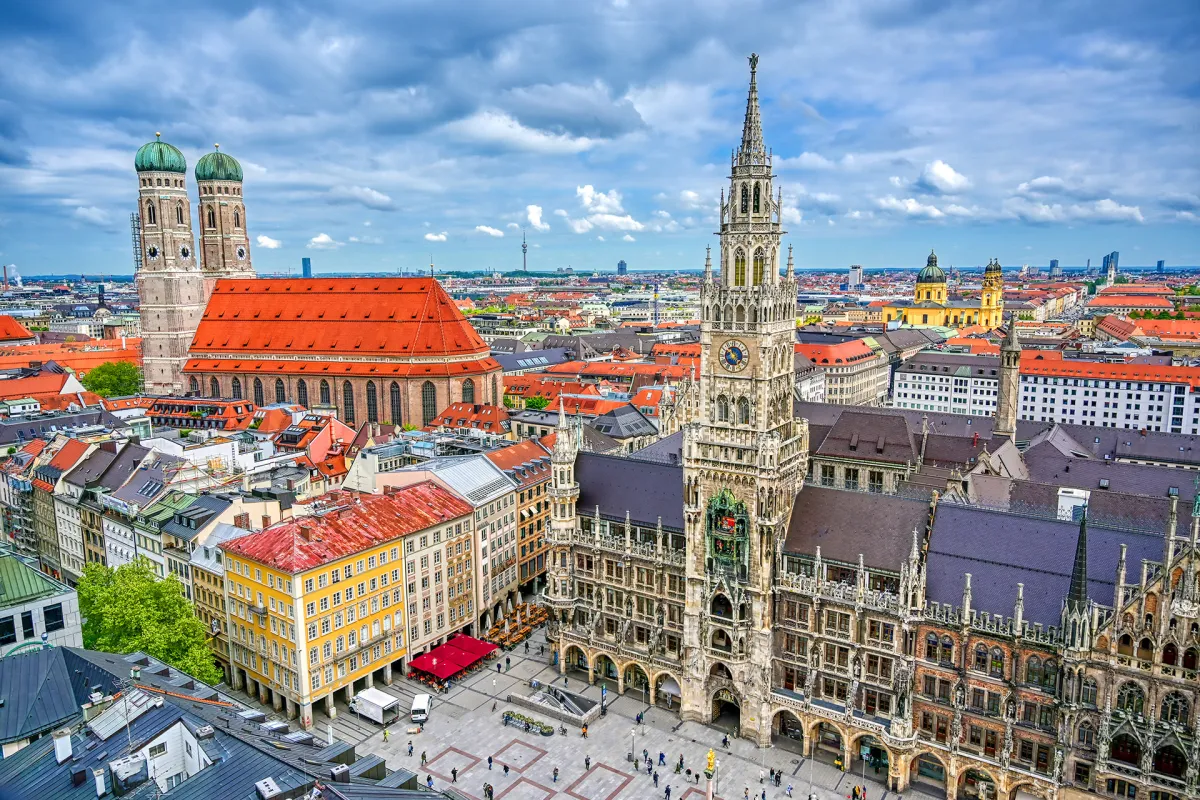
From 17 to 19 June 2026, the University of the Bundeswehr in Munich hosted the Intelligence College in Europe Academic Conference under the theme “Science and Intelligence in Europe – Responding to a New Era of Uncertainty.” In an outstanding setting, academics, researchers, institutional representatives and intelligence professionals from across Europe gathered to discuss developments in a field undergoing unprecedented technological, geopolitical and methodological transformation.
Beyond the high academic standard of the presentations, this edition confirmed a broader trend: the emergence of a genuine European intelligence studies community, built upon an increasingly close partnership between academia and intelligence services.
A Conference Demonstrating the Maturity of the European Network
Organised under the German Presidency of the Intelligence College in Europe, the conference brought together more than one hundred participants from across Europe. The outstanding organisation, the warm hospitality extended to delegations and the many opportunities for informal exchanges contributed greatly to the success of the event.
The scientific programme was particularly comprehensive, featuring sixteen thematic panels, plenary round tables and a collaborative research workshop. This diversity of formats enabled participants to examine the major contemporary intelligence challenges from complementary perspectives, combining theoretical approaches, operational experience and forward-looking analysis.
The presentations reflected the growing breadth of European intelligence research, covering topics such as artificial intelligence, hybrid warfare, international cooperation, digital transformation, research security, the psychology of intelligence analysis, HUMINT, lessons from the Cold War, and the relationship between intelligence producers and decision-makers.
Artificial Intelligence and Hybrid Threats at the Heart of the Discussions
Among the most prominent themes, the impact of artificial intelligence on intelligence work attracted particular attention. Several researchers presented studies exploring the evolution of analytical methods, the changing relationship between analysts and automated tools, and the challenges of trust and human oversight in increasingly digital environments.
Discussions also focused extensively on the hybrid threats confronting European democracies. Speakers stressed the need for intelligence organisations to adapt to a strategic environment characterised by growing uncertainty, where the boundaries between military conflict, influence operations, cyber-attacks and economic competition are becoming increasingly blurred.
A German-Norwegian research programme examining the cognitive mechanisms employed by intelligence analysts attracted considerable interest. By combining psychology, cognitive science and operational requirements, the project perfectly illustrates the current shift towards research with direct practical relevance for intelligence services.
Strengthening the Link Between Research and Practice
One of the conference’s principal conclusions was the shared determination to strengthen the connection between academic research and operational practice.
Many speakers emphasised the importance of producing research capable of delivering genuine added value to intelligence communities. This represents a significant evolution: intelligence studies are no longer confined to analysing public policy or the history of intelligence services, but increasingly seek to contribute directly to improving analytical methods, decision-making and strategic foresight.
More than half of the papers presented were recognised both for their academic originality and for their operational relevance. This ability to combine scholarly excellence with practical utility has become one of the defining strengths of the network developed by the Intelligence College in Europe.
An Academic Award to Encourage the Next Generation of Researchers
The Munich conference also saw the presentation of the inaugural Intelligence College in Europe Academic Award.
Created to promote emerging scholars working in the field of intelligence studies, the award recognises an outstanding dissertation or original essay addressing the annual theme selected by the College. For this first edition, the prize was awarded to the Italian researcher Giacomo Leccese for his study ‘The Sea’s Signature: Turning Oceanographic Data into Intelligence for Underwater Infrastructure Security’. The full paper is published separatly on this website while a summary will be published as well along the a summary of the two Honourable Mentions.
This initiative forms part of a broader strategy to support the next generation of European intelligence scholars. The competition is open to Master’s students from institutions belonging to the College’s Academic Network. In addition to a financial award and a Certificate of Excellence, the winner was invited to present his research during the conference, thereby facilitating his integration into the European academic community.
By recognising innovative research at an early stage of academic careers, the College is helping to build a sustainable pool of specialists in intelligence studies across Europe.
Looking Ahead to Paris 2028
Beyond the scientific discussions, considerable attention was devoted to preparations for the next Academic Conference, which will take place in Paris in 2028 under the French Presidency of the Intelligence College in Europe.
This represents an important opportunity to build upon the momentum created in Munich. Participants emphasised the value of involving all members of the Academic Advisory Board at an early stage in defining conference themes, selecting speakers and designing the various working formats.
Several possible developments were discussed, including organising closed workshops bringing together researchers and practitioners to address sensitive issues, introducing semi-closed sessions encouraging more direct exchanges, increasing the participation of carefully selected doctoral researchers, and creating additional practitioner-focused workshops where discussions could remain candid without involving classified information.
Many members of the network also expressed the wish to establish smaller thematic seminars between the biennial conferences. Such events would help maintain scientific momentum, strengthen professional networks and further enhance the visibility of research conducted under the auspices of the College.
A European Academic Community That Has Become Indispensable
The Munich conference marks an important milestone in the development of a European intellectual space dedicated to intelligence under the leadership of the Intelligence College in Europe. It confirms that intelligence studies have now matured into a fully-fledged academic discipline capable of producing high-quality research while addressing the practical needs of decision-makers and intelligence services.
In a strategic environment characterised by multiple crises, accelerating technological change and evolving forms of conflict, the ability to bridge academic research and professional practice has never been more important.
The prospect of the Paris 2028 Conference now opens a new chapter in the College’s development. It will provide an opportunity to consolidate the achievements of Munich, further expand the European network and strengthen the contribution of academic research to strategic thinking in support of the European intelligence community.