

College Academic Award : Summaries of the First Prize and the two Honourable Mentions.
College Academic Award : summaries of the First Prize and the two Honourable Mentions.
Giacomo Leccese (LUISS Guido Carli University, Italy) for his essay: “The Sea’s Signature: Turning Oceanographic Data into Intelligence for Underwater Infrastructure Security”
SUMMARY: "The article examines how civilian oceanographic sensors can support intelligence collection for the protection of critical underwater infrastructure, focusing on three core challenges—detection, attribution, and intelligence sharing—identified by the academic literature as the main problems that hybrid threats pose to this activity. It adopts a counterfactual analysis to assess how the use of such sensors might have influenced intelligence collection in three attack scenarios: the weaponization of civilian vessels, interference by submerged vectors, and cyberattacks. Beyond addressing a pressing European security issue, the study contributes to the literature by exploring the role of Measurement and Signature Intelligence (MASINT) in infrastructure protection and by focusing on the underexamined civilian dimension of this intelligence collection discipline."
Clara Grothe (University of Leiden) with her essay “Who is to blame for Germany’s shock? Assessing the role of the intelligence-policy nexus in the failure to predict the Russian invasion of Ukraine”
SUMMARY: “Russia’s invasion of Ukraine in February 2022 exposed Germany’s lack of preparedness and prompted major policy changes under the Zeitenwende. This essay examines how failures in the relationship between policymakers and the Federal Intelligence Service (BND) contributed to Germany’s inability to anticipate the invasion. Drawing on the performance criteria of Ikani et al. (2022), it argues that weaknesses in the intelligence-policy nexus, particularly policymakers’ limited responsiveness to intelligence assessments, undermined Germany’s ability to act on early warnings. The essay concludes by identifying lessons for strengthening intelligence-policy relations and preventing similar failures in the future.”
Anonymous student (University of the Bundeswehr, Munich) with his essay “Missing in (discursive) action - What exactly is a method in intelligence analysis and why is there a need for more precise definition?”
SUMMARY: “Despite vast amounts of literature about intelligence analysis methodology, there is no common comprehensive and precise definition of “method” in the field. By discussing the use of the term “method” in publicly available journal articles as well as authoritative monographs and anthologies, the essay develops the main argument that there are currently at least three different concepts associated with the term: 1) method as an organizing process, 2) as operations conducted on raw data, or 3) as cognitive exercises to support the critical thinking of the analyst. Based on these categories, the essay argues that a proper distinction of these different meanings of the term is necessary to improve the quality of intelligence analysis, given the assumption that analytic quality ought to be judged by the proper application of methods and not solely by the measurement of analytic outputs.”
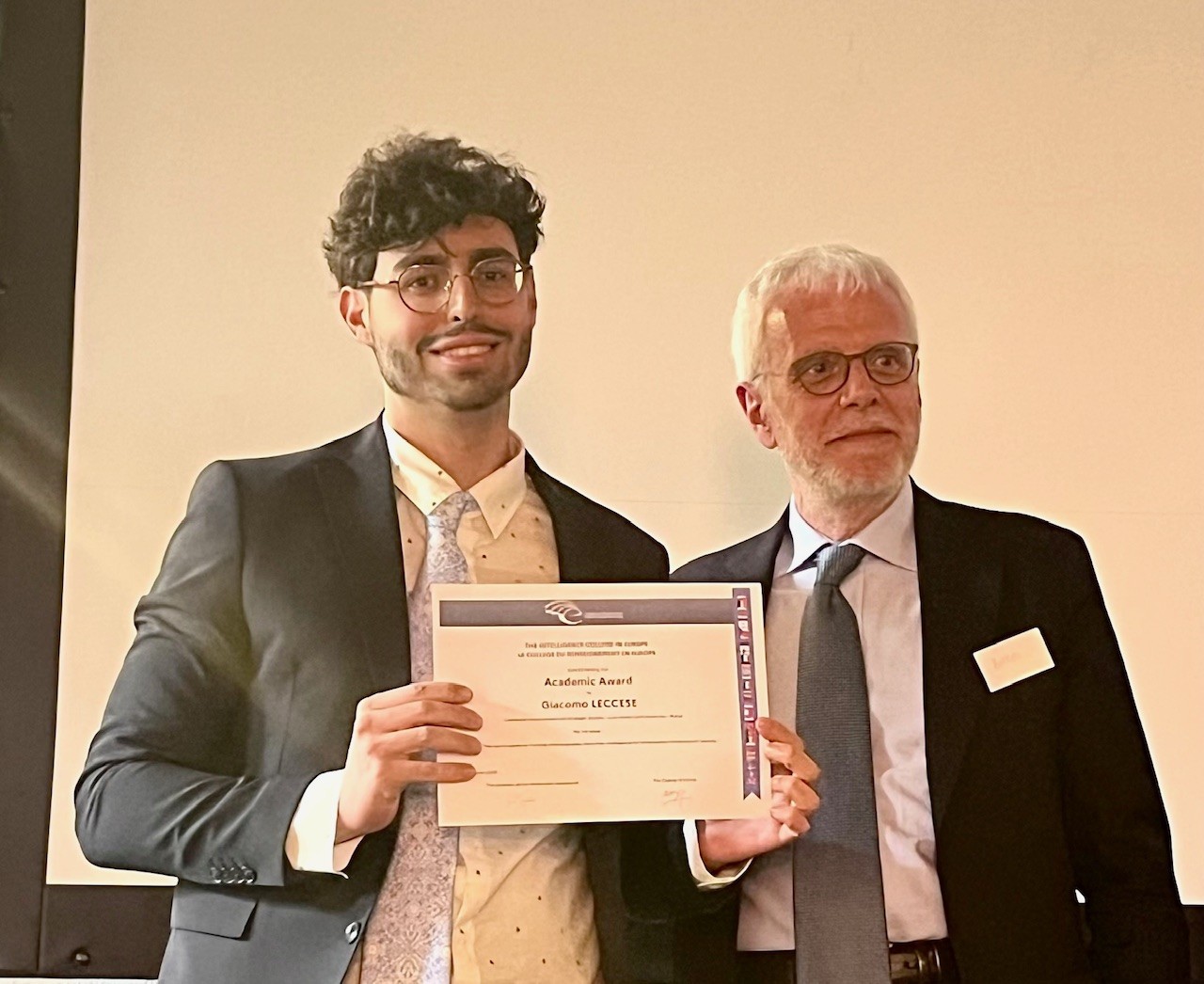
Intelligence College in Europe First Academic Award
Intelligence College in Europe First Academic Award : the laureate Giacomo LECCESE with Dr Luciano BOZZO, Associate Professor of International Relations & Theories of International Politics - University of Firenze
LUISS Guido Carli University, Italy
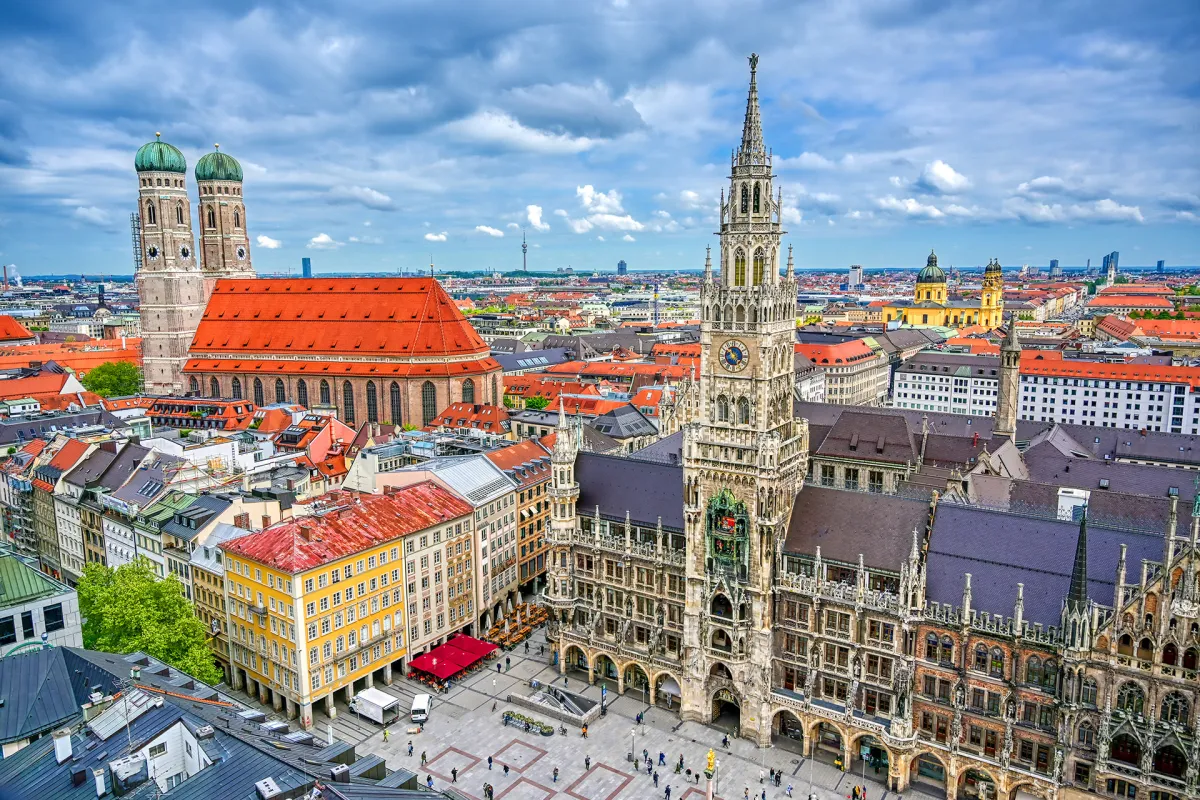
Munich 2026 Academic Conference
Munich 2026 Academic Conference: European Intelligence Research Reaches a New Milestone
For three days, the University of the Bundeswehr in Munich became the meeting point for Europe's intelligence research community. Against a strategic backdrop characterised by the return of high-intensity conflict, rapid technological innovation and the proliferation of hybrid threats, the Intelligence College in Europe Academic Conference demonstrated that dialogue between researchers and practitioners has become an essential driver for anticipating tomorrow's challenges. Beyond the scientific excellence of the discussions, the conference highlighted a significant development: European intelligence research is now firmly establishing itself as a genuine source of innovation serving the intelligence community.
“Innovation in intelligence no longer depends solely on technology or organisational structures, but on our ability to foster lasting collaboration between researchers and practitioners.”
From 17 to 19 June 2026, the University of the Bundeswehr in Munich hosted the Intelligence College in Europe Academic Conference under the theme “Science and Intelligence in Europe - Responding to a New Era of Uncertainty.” In an outstanding setting, academics, researchers, institutional representatives and intelligence professionals from across Europe gathered to discuss developments in a field undergoing unprecedented technological, geopolitical and methodological transformation.
Beyond the high academic standard of the presentations, this edition confirmed a broader trend: the emergence of a genuine European intelligence studies community, built upon an increasingly close partnership between academia and intelligence services.
A Conference Demonstrating the Maturity of the European Network
Organised under the German Presidency of the Intelligence College in Europe, the conference brought together more than one hundred participants from across Europe. The outstanding organisation, the warm hospitality extended to delegations and the many opportunities for informal exchanges contributed greatly to the success of the event.
The scientific programme was particularly comprehensive, featuring sixteen thematic panels, plenary round tables and a collaborative research workshop. This diversity of formats enabled participants to examine the major contemporary intelligence challenges from complementary perspectives, combining theoretical approaches, operational experience and forward-looking analysis.
The presentations reflected the growing breadth of European intelligence research, covering topics such as artificial intelligence, hybrid warfare, international cooperation, digital transformation, research security, the psychology of intelligence analysis, HUMINT, lessons from the Cold War, and the relationship between intelligence producers and decision-makers.
Artificial Intelligence and Hybrid Threats at the Heart of the Discussions
Among the most prominent themes, the impact of artificial intelligence on intelligence work attracted particular attention. Several researchers presented studies exploring the evolution of analytical methods, the changing relationship between analysts and automated tools, and the challenges of trust and human oversight in increasingly digital environments.
Discussions also focused extensively on the hybrid threats confronting European democracies. Speakers stressed the need for intelligence organisations to adapt to a strategic environment characterised by growing uncertainty, where the boundaries between military conflict, influence operations, cyber-attacks and economic competition are becoming increasingly blurred.
A German-Norwegian research programme examining the cognitive mechanisms employed by intelligence analysts attracted considerable interest. By combining psychology, cognitive science and operational requirements, the project perfectly illustrates the current shift towards research with direct practical relevance for intelligence services.
Strengthening the Link Between Research and Practice
One of the conference's principal conclusions was the shared determination to strengthen the connection between academic research and operational practice.
Many speakers emphasised the importance of producing research capable of delivering genuine added value to intelligence communities. This represents a significant evolution: intelligence studies are no longer confined to analysing public policy or the history of intelligence services, but increasingly seek to contribute directly to improving analytical methods, decision-making and strategic foresight.
More than half of the papers presented were recognised both for their academic originality and for their operational relevance. This ability to combine scholarly excellence with practical utility has become one of the defining strengths of the network developed by the Intelligence College in Europe.
An Academic Award to Encourage the Next Generation of Researchers
The Munich conference also saw the presentation of the inaugural Intelligence College in Europe Academic Award.
Created to promote emerging scholars working in the field of intelligence studies, the award recognises an outstanding dissertation or original essay addressing the annual theme selected by the College. For this first edition, the prize was awarded to the Italian researcher Giacomo Leccese for his study 'The Sea's Signature: Turning Oceanographic Data into Intelligence for Underwater Infrastructure Security'. The full paper is published separatly on this website while a summary will be published as well along the a summary of the two Honourable Mentions.
This initiative forms part of a broader strategy to support the next generation of European intelligence scholars. The competition is open to Master's students from institutions belonging to the College's Academic Network. In addition to a financial award and a Certificate of Excellence, the winner was invited to present his research during the conference, thereby facilitating his integration into the European academic community.
By recognising innovative research at an early stage of academic careers, the College is helping to build a sustainable pool of specialists in intelligence studies across Europe.
Looking Ahead to Paris 2028
Beyond the scientific discussions, considerable attention was devoted to preparations for the next Academic Conference, which will take place in Paris in 2028 under the French Presidency of the Intelligence College in Europe.
This represents an important opportunity to build upon the momentum created in Munich. Participants emphasised the value of involving all members of the Academic Advisory Board at an early stage in defining conference themes, selecting speakers and designing the various working formats.
Several possible developments were discussed, including organising closed workshops bringing together researchers and practitioners to address sensitive issues, introducing semi-closed sessions encouraging more direct exchanges, increasing the participation of carefully selected doctoral researchers, and creating additional practitioner-focused workshops where discussions could remain candid without involving classified information.
Many members of the network also expressed the wish to establish smaller thematic seminars between the biennial conferences. Such events would help maintain scientific momentum, strengthen professional networks and further enhance the visibility of research conducted under the auspices of the College.
A European Academic Community That Has Become Indispensable
The Munich conference marks an important milestone in the development of a European intellectual space dedicated to intelligence under the leadership of the Intelligence College in Europe. It confirms that intelligence studies have now matured into a fully-fledged academic discipline capable of producing high-quality research while addressing the practical needs of decision-makers and intelligence services.
In a strategic environment characterised by multiple crises, accelerating technological change and evolving forms of conflict, the ability to bridge academic research and professional practice has never been more important.
The prospect of the Paris 2028 Conference now opens a new chapter in the College's development. It will provide an opportunity to consolidate the achievements of Munich, further expand the European network and strengthen the contribution of academic research to strategic thinking in support of the European intelligence community.

Expansion of the Academic Network in 2026
Since the beginning of 2026, the ICE Academic Network has continued to expand and has welcomed new member countries and additional institutions from countries already represented in the Network.
We are pleased to welcome Switzerland as our 19 th Academic Network member. The Network has also been strengthened by the addition of the OSINT Centre of Excellence from Croatia and IRSEM from France. Austria has also significantly strengthened its academic presence within the Academic Network through the addition of the Austrian Center for Intelligence, Propaganda and
Security Studies (ACIPSS), Karl-Franzens-Universität Graz.

Spain Leads Flagship European Intelligence Training Programme
In 2024, Spain, holding the presidency of the Intelligence College in Europe (IntelCollege), addressed a key need raised by the College’s Steering Committee: ensuring that intelligence officers are equipped to understand European structures and to support EU security and intelligence agencies.
To meet this challenge, Spain’s National Intelligence Centre (CNI) launched a high-level postgraduate course in partnership with the University of Castilla-La Mancha (UCLM) and its renowned Luis Ortega Álvarez Center for European Studies. Delivered in a hybrid format—combining online sessions with in-person classes in Toledo—the programme offers participants an official certification aligned with the European Bologna Framework.
Following the success of the inaugural edition, Spain repeated the initiative in 2024. The second course concluded on Thursday, 11 September, with a certificate ceremony and keynote address by the Secretary General of the CNI, who personally underlined the importance Spain places on this initiative.
This programme stands as a model of cooperation between the intelligence community and academia, directly supporting one of IntelCollege’s core missions: preparing intelligence officers to work effectively together at the European level, whether in minilateral or multilateral formats.
As one of the College’s flagship training programmes, this demanding course fosters a shared knowledge base among participants, deepens their understanding of European institutions, and strengthens the personal and professional bonds that will underpin future cooperation across Europe’s intelligence community.


Postgraduate course on “Strategic Leadership in Security and Intelligence”
For the third time in this format, the Academia Națională de Informații “Mihai Viteazul” (ANIMV) of Romania, in cooperation with the European Security and Defence College (ESDC), organised a one-week course on “Strategic Leadership in Security and Intelligence” in Bucharest. The course was open to participants from the Intelligence College in Europe (Intel College).
The Intel College was honoured to open the session on Monday, 22 September, and to contribute with several lecturers. Designed as an interactive and highly practical programme, the course targets high-potential young managers who are preparing to lead units or directorates in complex and high-pressure environments. Particular emphasis was placed on human resources management and interactive workshops, enabling participants from different countries to learn from one another’s experiences.
The Intelligence College in Europe is proud both to support and to benefit from this now well-established ANIMV–ESDC initiative. Since 2023, the course has increasingly reflected a strong European dimension, with lecturers drawn from across the continent, in the true spirit of ESDC and the Intel College.
Coming directly after the Toledo EU Expert Course, this event marked an excellent start to the new academic year of the Intelligence College in Europe, and it stands as a fine example of the fruitful cooperation between the College, the ESDC, and ANIMV in building a genuine European strategic culture.
Multumesc! Our sincere thanks go to our partners at SRI and ANIMV for making this valuable opportunity possible.

Doctoral Thesis: Member State Intelligence Support to EU Foreign Policymaking
The College's Permanent Secretariat extends its warmest congratulations to Dr. Daniel Neumann for successfully complete a doctoral degree at King’s College. His thesis, which addresses a subject close to our hearts, explores the conditions under which EU Member States support the EU Intelligence and Situation Centre (INTCEN) in the field of foreign policy.
This thesis asks under what conditions member states provide intelligence support to EU foreign policy making, that is, to the EU Intelligence and Situation Centre (INTCEN). INTCEN provides EU policy makers with strategic intelligence synthesised from member state contributions. The EU treaties stipulate that national security remains the sole responsibility of the member states (art. 4.2 TEU). This is widely interpreted to apply to intelligence, rendering any support to INTCEN voluntary. EU institutions have repeatedly encouraged member states to contribute. However, scepticism persists about the actual level of cooperation.
Dr. Daniel Neumann’s work investigates when member states provide support to INTCEN. It is situated in the academic literature about intelligence cooperation. It challenges the widely criticised but dominant neorealist approach and inductively develops an alternative model to explain intelligence support by drawing on insights from the European studies, the public administration, and the sociological literatures. The empirical research is based on the thematic analysis of 25 elite interviews triangulated with additional sources identified through desk research.
The thesis argues that as an analytic heuristic the provision of intelligence support to INTCEN can be understood as a top-down three-step process. First, at the political level, intelligence support is motivated by seeking to influence EU policymaking with intelligence by shaping the underlying situational understanding. Second, at the organisational level, quasi-autonomous intelligence services prioritise and allocate resources to the task of providing intelligence support based on their organisational identity, intelligence capacity, and bureaucratic capacity. Third, at the working level, intelligence analysts seconded to Brussels implement the intelligence support. By utilising their leeway and through ensuing social dynamics, these practitioners further impact the intelligence support of their services.
It then concludes that member states intelligence support is therefore shaped at all levels of government and determined by policy interests of policymakers, bureaucratic characteristics of intelligence services, as well as social dynamics of working-level practitioners. In developing the model, this thesis contributes to the academic literature on intelligence cooperation by advancing discussions on theorising multilateral intelligence cooperation in applying underutilised approaches. It further provides empirical insights into an underexplored intelligence cooperation forming part of EU foreign policy making.

Scholarly Contribution: The Social Ties That Bind
The Social Ties That Bind: Trust & Cooperation in EU Intelligence
Traditional views on intelligence cooperation emphasize transactional exchanges—quid pro quo deals between states. But is that the full story? In his PhD research, Dr. Pepijn Tuinier, senior policy advisor at the Dutch Ministry of Defence and professor at the Netherlands Defence Academy, challenges this notion. His study reveals that social relations and trust play a far greater role in intelligence cooperation than often assumed.
As an active member of the ICE Academic Network, Tuinier explores how shared identities and personal networks foster cooperation within the EU intelligence community. Through in-depth interviews with senior intelligence professionals, he demonstrates that, far from being a shadowy world of secrecy and rivalry, intelligence services—like other organizations—thrive on interaction, goodwill, and mutual understanding.

Italian Award “A Thesis for National Security”. Conclusion of the sixth edition
On December 10th, the sixth edition of “A Thesis for National Security” prize ceremony, promoted by the Security Intelligence Department (DIS) took place in Rome, at the headquarters of the Italian Intelligence System. The event was attended by Alfredo Mantovano, the Undersecretary of State to the Presidency of the Council of Ministers - Delegated Authority for the Security of the Republic, the Director General of DIS, Elisabetta Belloni and the Directors of the Italian Intelligence Agencies.
The award aims at bringing the younger generation closer to the world of intelligence, promoting and encouraging studies on topics related to national security.
It was launched in 2014 as part of the activities to promote security culture, and over time, the competition has witnessed an increasing relevant involvement of the university world, and has become an annual initiative: more than 100 recent graduates from more than 40 national universities have participated.
This initiative represents yet another sign of the Intelligence's openness to the outside world and the solidity of its relationship with civil society and the university environment.
In this edition (2023-2024), 7 participants were rewarded with a prize worth €2,500 each for the best master thesis, rated no less than 105/110, on the following topics, among others: geopolitics and international relations; threats to national security; law, doctrine and history of intelligence; economic and financial security.
These are the winners selected by an internal Committee:
- Samuele Bernardi, University of Pisa, From EU strategic autonomy to EU public order and security. Towards the framing of an “EU strategic security”?;
- Roberto Colle, University of Trento, Democratic control of the information and security services: Historical and comparative aspects of a current issue;
- Edoardo Liberati, Sapienza University of Roma, Efficient, Reusable and High Error Tolerant Fuzzy Extractor for Physical Unclonable Functions;
- Alessandro Lotto, University of Padova, BARON: Base-Station Authentication Through Core Network for Mobility Management in 5G Networks;
- Matteo Marras, University of Torino, The defence of national interests and Chinese investments in Italy;
- Martina Serao, University of Roma Tre, The strategic competition between European Union and Russian Federation: A Net assessment analysis;
- Maria Vittoria Zucca, University of Trento, Cybercrime in healthcare: history, diagnosis, and prognosis of an IT “disease.”.
The seventh edition of the Award is ongoing and you can find it on the Italian Intelligence website www.sicurezzanazionale.gov.it.

ANIMV and ESDC: Expert Course on Hybrid Threats in Bucharest
Week 43, the Romanian Intelligence Academy “Mihai Viteazul” (ANIMV) and the European Security and Defence College (ESDC) Doctoral School organised a very dynamic and high-quality Advanced Expert Course on Hybrid Threats in Bucharest.
This course, open to ESDC Doctoral School students and intelligence practitioners from both Member States and EU institutions, was of impressive quality!
The Permanent Secretariat of ICE, an associate network partner of ESDC, which had already been invited in 2022 to the ESDC Doctoral School annual conference, was more than happy to support this initiative, bridging academic and intelligence expertise on these complex types of threats!
After presenting the EU intelligence and security setup, including on Hybrid Threats (with a special focus on the EU Hybrid Fusion Cell created in 2016 within EU INTCEN), the ICE.PS Director emphasized the impact of the hybrid thematic on the EU intelligence structure, as well as EU-NATO cooperation. Following this, in a more concise manner, the possible role of ICE in building a stronger European strategic culture—a crucial feature when addressing hybrid threats—was explained.
The high quality of the participants made this advanced expert course exceptionally dynamic and interactive!
Congratulations to ANIMV and to the ESDC Doctoral School!
